The Best Job Sites in the UK (2026): Where the Jobs Actually Are, by Type of Role
In short
- There is no single best site. Use four: one aggregator (Indeed or Adzuna), one board where employers post directly (Reed, Totaljobs or CV-Library), the official site for your sector if it has one (NHS Jobs, Civil Service Jobs, GOV.UK Find a job), and one specialist board.
- Half of UK adverts now show a salary. Filter on it; the other half are not hiding good news.
- Set alerts and apply in the first few days. With 2.3 jobseekers per advert, late applications are competing with people already at interview.
- Public-sector jobs are rarely on the big boards in full. The NHS, the Civil Service and most councils recruit through their own sites.
- Scams follow the boards. Three in ten UK adults online have met an employment scam, and the average loss is over £3,000. Never pay, and never send ID before an offer.
The Office for National Statistics counted 691,000 vacancies in the UK in July to September 2026, "the first time the total has been below 700,000 since February to April 2021", with 2.4 unemployed people for each one. Adzuna, which indexes adverts across the main sites, counted 728,037 advertised vacancies at the end of September, down 11.88% on a year earlier, with 2.33 jobseekers per vacancy and an average advertised salary of £43,780. Just over half of adverts, 50.99%, stated a salary, the first month a majority did.
Indeed's own postings index tells the same story: UK job postings stood at 69 on 16 October 2026 against a February 2020 baseline of 100, "31% below early 2020 levels" and down 7.5% on the year. So the jobs exist, there are fewer of them than two years ago, and they are spread across more sites than anyone can watch by hand. This guide says which sites carry what, with each site's own figures where it publishes them, and how to run four of them in 20 minutes a day.
Boards, aggregators and official sites
| Type | How the jobs get there | Examples | Watch for |
|---|---|---|---|
| Job board | Employers and agencies pay to post. You apply on the board or are sent to the employer | Reed, Totaljobs, CV-Library, Guardian Jobs | Agency adverts that describe a "client" rather than a named employer |
| Aggregator | Collects adverts from boards, employer sites and agencies, plus its own paid postings | Indeed, Adzuna, LinkedIn Jobs (partly) | Duplicates, and adverts that have closed at source |
| Official site | The employer or government lists its own vacancies. Free, no agencies | NHS Jobs, Civil Service Jobs, GOV.UK Find a job, council sites | Application forms rather than CVs; strict closing dates |
| Specialist board | One sector or level, often run by a trade body or publisher | jobs.ac.uk, TES, CharityJob, eFinancialCareers | Smaller volume, but less competition and better-fitted adverts |
One more number before the tables. The National Careers Service says that in some industries the hidden job market, jobs never advertised, "can be as high as 70% to 85% of all vacancies". Boards are where you start, not the whole search.
The difference matters for two reasons. An aggregator shows you the most adverts, including ones that have closed or were posted by three agencies for the same role. A board shows fewer, but each is a live posting someone paid for. An official site shows only the real vacancies and the only route to apply.
The general sites
| Site | What it is | What it says about itself | Best for |
|---|---|---|---|
| Indeed | Aggregator plus direct postings | "The world's #1 job site", "3.5M+ employers", "31 hires per minute" (March 2026) | Volume, and a first pass on any search |
| LinkedIn Jobs | Postings plus aggregated adverts, inside the network | 1.4 billion members; about 9,000 applications a minute | Professional roles, and the hiring manager's name |
| Reed.co.uk | Board run by the Reed recruitment group since 1995 | Vacancies from "almost 19,000 recruiters a year"; "over 80,000 applications every day" | Office, finance, admin and agency roles |
| Totaljobs | Board owned by Stepstone Group UK, alongside Jobsite, CWJobs, Caterer.com, Milkround and CareerStructure | "Over 280,000 live jobs adverts" on its group page, undated | Trades, logistics, engineering, hospitality |
| CV-Library | Independent board; employers search uploaded CVs | "The UK's largest independent job site", about 150,000 live vacancies on the day we checked | Regional roles, driving, warehouse, construction, care |
| Adzuna | Aggregator, publishes the monthly UK Job Market Report | 728,037 vacancies indexed, September 2026 | Salary data and "what is this role worth" checks |
| GOV.UK Find a job | "The free government recruitment service", which replaced Universal Jobmatch in 2018 and is operated by Adzuna for the DWP | Official; covers England, Scotland and Wales | Entry-level, local and part-time roles; no agency fees |
Two of these are enough as a daily habit. Indeed or Adzuna for breadth, and one board whose adverts suit your field. Running all seven means seeing the same advert four times and missing the one that only appeared on an official site.
Official and public-sector sites
Public-sector employers mostly do not pay job boards, so the only complete list is their own site, and the only way to apply is their form.
- NHS Jobs (jobs.nhs.uk) is "the official online recruitment service for the NHS in England and Wales", with "approximately 35,000 jobs posted each month" across 350 role types and just over 3 million applications in 2025/26. The application is a structured form scored against the person specification, not a CV. The NHS supporting information guide covers how it is scored.
- Civil Service Jobs (civilservicejobs.service.gov.uk) carries Civil Service vacancies, applied for through behaviour and strength statements under Success Profiles.
- Find a job (findajob.dwp.gov.uk) is the government's own board. GOV.UK describes it as a service to "find and apply for full or part-time jobs in England, Scotland and Wales"; Northern Ireland has "a different service".
- Find an apprenticeship is GOV.UK's service to "search and apply for apprenticeships in England" for anyone "16 or over". The Department for Education counted 46,640 adverts covering 69,820 vacancies on it between August 2025 and June 2026, down 12% and 23% on the year before.
- Councils, universities and schools recruit through their own sites and through sector boards: jobs.ac.uk for higher education, TES for teaching, and each council's careers page for local government. Scotland has one shared site, myjobscotland, "the national shared recruitment portal for Scotland's 32 local authorities and public sector bodies".
Specialist boards
A specialist board carries fewer adverts and better ones. Pick one for your field and check it twice a week.
| Field | Boards to check |
|---|---|
| Technology | CWJobs, Welcome to the Jungle (which bought the British site Otta in 2024), plus LinkedIn |
| Finance and banking | eFinancialCareers, plus the professional bodies' own boards (ICAEW, CIMA, ACCA) |
| Charities and public interest | CharityJob, Guardian Jobs, Third Sector Jobs |
| Hospitality | Caterer.com, plus the chains' own careers pages |
| Construction and engineering | Careerstructure, CV-Library, the trade press job pages |
| Graduates and early careers | Prospects, TARGETjobs, Gradcracker (STEM), Bright Network, Milkround, and your university careers service |
| Education and research | TES, jobs.ac.uk, Guardian Jobs |
Three set-ups, worked through
Three fictional jobseekers and their four sites
A newly qualified nurse in Leeds: NHS Jobs (the official site, with alerts for Band 5 posts in three trusts), Indeed (for private providers and agencies), a nursing agency's own board, and LinkedIn for the trust recruiters who post about open days. Three of her four interviews came from NHS Jobs alerts set to "Band 5, Leeds, posted today".
A warehouse team leader in the Midlands: Indeed, CV-Library with a current CV uploaded, GOV.UK Find a job, and Totaljobs for the logistics firms that post there first. He records the source of every application and drops Find a job after a month when it produces nothing at his level.
A marketing manager in Bristol: LinkedIn (with the hiring manager's name), Reed, Guardian Jobs for the charity and agency roles, and Adzuna purely to check what each title pays before she sets her range. Her best interview came from a LinkedIn post by a founder, three days before the advert reached any board.
How to use them without drowning
- Four sites, not fourteen. One aggregator, one board, the official site for your sector, one specialist. Review the set monthly and drop any that has not produced an interview.
- Alerts do the searching. The National Careers Service's advice is that "most job boards let you sign up to receive email alerts when an organisation publishes a new job vacancy", and that "many employers still recruit through their own company websites". Every site above sends alerts. Set one per site for the exact title and location, daily, and read them in one sitting. The LinkedIn job search guide has the Boolean search and alert setup that applies to most boards.
- Apply in the first three days. Boards sort by date, employers shortlist as applications arrive, and many close early. A good application on day two beats a perfect one on day ten.
- Filter on salary, but not only on salary. Half of adverts show pay. The government's consultation on requiring it closed on 27 October 2026 and the outcome is pending. Until then, the other half are worth a question to the recruiter, not a skip.
- Apply at source when you can. If an aggregator links to the employer's own careers page, apply there. The application lands in their system first-hand, and you avoid the duplicate copies agencies post.
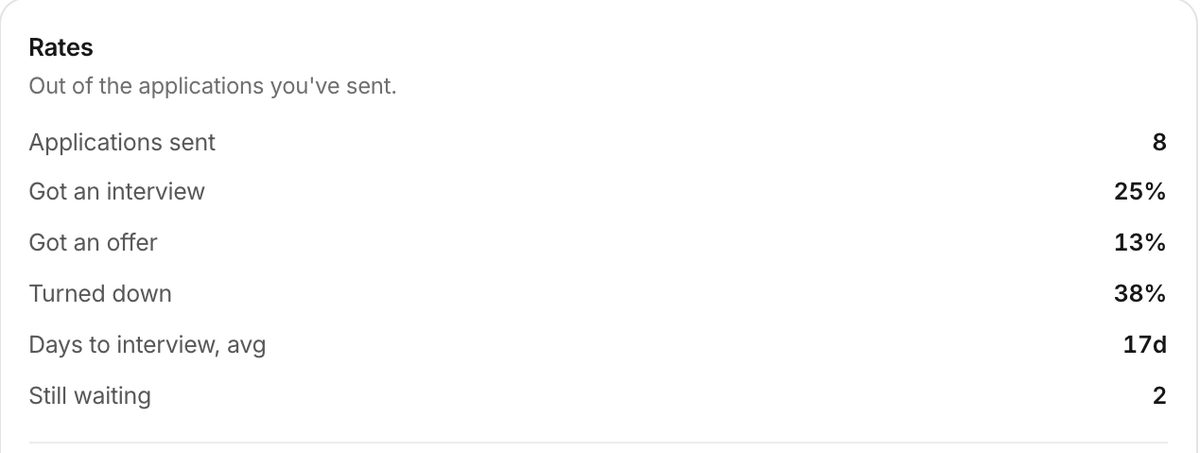
- Keep one list. Four sites and daily alerts produce a dozen applications a week. Record each one, with the site it came from, so you learn which source gets interviews. The application tracking guide has a free template. Applyd's tracker does the arithmetic for you, including which stage your applications stall at.
Spotting fake adverts
JobsAware, the non-profit set up with the Metropolitan Police to tackle job scams, reported that job scam reports rose "259% from 56 to 201" between the last quarters of 2022 and 2023, that "30% of UK online adults have experienced employment scams or fraud" according to Ofcom, and that victims lose "on average over £3,000". The Disclosure and Barring Service lists seven signs: poorly written adverts, suspicious contact details, an unrealistic salary, a job offer without an interview, being asked for money, illegitimate companies or emails, and non-UK domains posing as UK ones.
The boards say they are fighting it. LinkedIn's May 2026 safety report says "98.7% of detected spam and scam content is removed by automated defenses before it's seen by members", that "90% of reported scam messages involve moving to private messaging", and that in its five-country survey "62% report having seen a job they suspected was fraudulent" and 21% had been a victim. That is the scale of what gets through.
Three rules cover most of it. Never pay anything, for anything, to get a job; UK agencies cannot legally charge you for finding work. Never send your passport, National Insurance number or bank details before a written offer. And apply through the board or the employer's site, not a link in a message. If you have lost money, report it to Report Fraud, which replaced Action Fraud in December 2025, at reportfraud.police.uk or on 0300 123 2040.
Common mistakes
- Only using one aggregator. It misses the official sites entirely and shows closed adverts as live.
- Uploading a CV to every board and waiting. Boards where employers search CVs, like CV-Library and Reed, work only if the CV is current and keyword-matched. Update it monthly or remove it.
- Applying everywhere on day one. Twenty untailored applications get fewer interviews than five tailored ones. Tailor first, then send.
- Ignoring the specialist board because it has fewer jobs. Fewer jobs and fewer applicants per job is the better ratio.
- Treating "competitive salary" as a red flag. Half of UK adverts still don't state pay. Ask on the first call.
- Not recording the source. Without it, you cannot tell which site is worth your time next month.
Frequently asked questions
What is the best job site in the UK?
There isn't one. Indeed and Adzuna show the most adverts because they aggregate from everywhere; Reed, Totaljobs and CV-Library carry paid postings from employers and agencies; NHS Jobs, Civil Service Jobs and GOV.UK Find a job carry official vacancies that rarely appear in full elsewhere. Use one of each, plus a specialist board for your field.
Are UK job sites free for jobseekers?
Yes. Every site in this guide is free to search and apply. Employers and agencies pay to post. UK recruitment agencies cannot charge you for finding work, so any site or advert that asks for a registration, training or processing fee to get a job is a scam.
How many job sites should I use?
Four. One aggregator, one board, the official site for your sector, and one specialist board, each with a daily email alert. More than that and you read the same advert several times and miss the one that only appeared on an official site. Review the set monthly and drop any that has not produced an interview.
Is Indeed or LinkedIn better for finding a job in the UK?
Indeed shows more adverts, because it aggregates from boards, employer sites and agencies, and suits a first search in any field. LinkedIn carries professional roles, shows who posted them and lets you message the hiring manager. For most office-based roles, use both; for trades, care, driving and hospitality, Indeed plus a board like CV-Library or Totaljobs.
Where are NHS and Civil Service jobs advertised?
On their own sites. NHS Jobs (jobs.nhs.uk) is the NHS's own vacancy site, and Civil Service Jobs lists Civil Service vacancies. Both use structured application forms rather than CVs, and both close applications on the stated date or earlier. Aggregators show some of these adverts, but the application always goes through the official site.
How do I spot a fake job advert?
The Disclosure and Barring Service lists seven signs: poorly written adverts, suspicious contact details, an unrealistic salary, an offer without an interview, being asked for money, illegitimate companies or emails, and misleading domains. Never pay, never send ID or bank details before a written offer, and apply through the board or the employer's own site. Report losses to Report Fraud.
Sources
- Vacancies and jobs in the UK: October 2026 — Office for National Statistics
- UK Job Market Report (30 September 2026) — Adzuna
- About Indeed — Indeed
- About LinkedIn — LinkedIn Pressroom
- About Reed.co.uk — Reed.co.uk
- CV-Library job search — CV-Library
- About us (Stepstone Group UK brands and figures) — Jobsite
- UK Labour Market Snapshot, October 2026 (26 October 2026) — Indeed Hiring Lab
- About NHS Jobs — NHS Business Services Authority
- Apprenticeships: Find an Apprenticeship adverts and vacancies (16 July 2026) — Department for Education
- myjobscotland — Scottish local authorities
- Advertised job vacancies — National Careers Service
- New Find a job service to support thousands of jobseekers into work (20 April 2018) — Department for Work and Pensions, GOV.UK
- LinkedIn Job Search Safety Pulse (6 May 2026) — LinkedIn Pressroom
- Welcome to the Jungle acquires Otta (22 January 2024) — Maddyness UK
- Find a job — GOV.UK
- Find an apprenticeship — GOV.UK
- Equal pay and pay discrimination: consultation (closed 27 October 2026) — GOV.UK
- Job scam reports rise 259% (22 March 2024) — JobsAware
- New Year jobseekers urged to watch out for 7 signs of job scams (26 January 2023) — Disclosure and Barring Service, GOV.UK
- Agency workers: your rights. Fees — GOV.UK
- Report Fraud: what does this new era of fraud reporting mean? (21 January 2026) — Which?