Graduate Schemes in Banking and Tech (UK): Deadlines, Assessment Centres, Salaries and Where the Places Are
In short
- Applications for September 2027 intakes opened from September 2026. Prospects says employers "usually continue to accept applications until the end of the year or early January", with online tests and video interviews through the autumn and assessment centres from January to March 2027. Some schemes are rolling and "close once they're full".
- The odds are long and steady: the Institute of Student Employers counted 141 applications per graduate vacancy in 2025/26, 172 in London, with graduate hiring up 4% after an 8% fall the year before.
- Published pay runs from £31,554 on the Civil Service Fast Stream to £60,000 on NatWest's corporate and institutional banking programme. The ISE's median starting salary was £33,000.
- The stages are standard across banks: an application, a situational judgement test, a skills test, a recorded video interview, a full-day assessment centre, an offer. Employers say they are redesigning them because of AI.
- A degree apprenticeship is the same job with the fees paid; the Graduate visa shortens to 18 months for applications from 1 January 2027; and a direct application to a non-scheme role is a legitimate route in.
A graduate scheme is a structured entry job with rotations, training and often a professional qualification, recruited a year in advance through a process that is almost identical from one bank to the next. This guide gives the calendar for the 2027 intake, the odds, the salaries employers publish, the stages, where the places are, and two alternatives. The figures come from employers' own pages and the industry's own surveys.
The calendar
| When | What happens |
|---|---|
| September to October 2026 | Applications open for September 2027 starts. Prospects: schemes "typically open from September 2026". |
| October 2026 to early 2027 | Online tests and recorded video interviews, as soon as you apply. Early applicants are assessed first. |
| November 2026 to early January 2027 | Most deadlines. Live examples on 6 November 2026: HSBC's Sheffield engineering programme closes 15 November, Arm 22 November, Barclays' Glasgow technology developer programme 27 November; EY says opportunities "close once positions are filled or if we receive a high volume of applications". The Bank of England opens on 7 December. |
| January to March 2027 | Assessment centres and final interviews. |
| September 2027 | Start dates. NatWest's programmes "start September 2027"; the Fast Stream starts "on either 6 September or 4 October 2027". |
The Civil Service Fast Stream is the exception: "the application window for 2027 entry is open between midday 8 October 2026 and midday 5 November 2026", so it has already closed. Banks run rolling windows: HSBC says "applications will be reviewed on a rolling basis" and may close early, Barclays that a vacancy "may close ahead of the advertised date due to application volumes". Two rules follow. Apply in the first weeks a scheme opens, because rolling assessment means early applicants are assessed before the pool fills. And treat the stated deadline as the latest possible date, not the real one.
The odds
The Institute of Student Employers surveys the large graduate recruiters each autumn. Its 2025 report, from 155 employers who took "more than 1.8 million applications", found graduate hiring "had fallen by 8% year-on-year", applications "at 140 per vacancy" for the second year, and a median starting salary of £33,000. Its 2026 report, published on 14 October 2026 from 1.7 million applications and 31,577 hires, found hiring up 4% and 141 applications per vacancy, 172 in London. High Fliers, which tracks the Times Top 100 employers, reports that they cut graduate recruitment by 5.1% in 2025 and forecast "a further decrease of 0.5%" for 2026, leaving it "slumped by 24.5% since 2022".
Read those numbers two ways. At 140 applications per place, scheme applicants send twenty and treat it as a campaign; Prospects' 2026 survey found 20% of recent graduates "had applied for more than 100 jobs". And a market that has stopped falling is better than the 2024 and 2025 headlines. The outcome data is steadier than the odds: HESA's Graduate Outcomes survey for the class of 2023/24, published on 4 June 2026, found 57% in full-time employment fifteen months after graduating, 7% unemployed, and a median salary of £30,000 for first-degree leavers in full-time work.
What the schemes pay
Most employers do not publish graduate salaries. These do, on their own careers pages, for 2027 starts unless stated:
| Scheme | Salary | Notes |
|---|---|---|
| NatWest Group, corporate and institutional banking | £60,000 | Two years, 2:1 in any subject, starts September 2027. |
| Arm, engineering pathways | "£48,000 (Bachelor level) or £49,000 (Master level)" | Cambridge, Manchester, Sheffield, Bristol; closes 22 November 2026; "visa sponsorship support is also available". |
| NatWest Group, engineering | "£42,000 National / £52,000 London" | One year, 2:1 in a STEM subject, starts September 2027. |
| Sky, emerging technology | "£40,000 per annum" | Two years from September 2027, Osterley; "Sky does not offer sponsorship". |
| NatWest Group, risk | £37,500 | Two years, 2:1 in a STEM subject; the open programme is risk modelling in Belfast. |
| Financial Conduct Authority | "£37,000 in London", "£33,600 in Leeds and Edinburgh" | "Salaries may vary depending on the programme." |
| Aviva, actuarial pathway | "£35,200 plus exam related pay increases" | Permanent from day one; Bristol, Norwich, York. |
| Aviva, accountancy (ACA) pathway | "£34,200 plus exam-related pay increases" | Permanent from day one; three years. |
| Civil Service Fast Stream | £31,554 | "Earning potential of £45-55,000" on completion; postings across the UK. |
| ISE median, all graduate schemes | £33,000 | 2024/25 cycle, 155 employers. |
The Big Four do not publish. KPMG says "the starting salary for graduates and apprentices varies by programme and location" and that graduates "are eligible to be considered for an annual bonus" from the second year, except in audit; EY says "we don't discuss salaries before an offer is made". The spread among those that do publish is the lesson: a corporate banking scheme pays nearly double the Fast Stream, and the gap to the ISE median is £27,000 at one end and £1,500 at the other. For what those salaries become, our guide to banking and finance salaries gives the ONS medians by occupation and the London premium.
The stages, and what each one scores
NatWest publishes its sequence, and it is the template most banks use: "submit your application"; "work scenarios", which it describes as "an assessment that tests your ability to solve work-related problems"; an "online skills assessment", which is "a work style and problem solving assessment"; a "video recording" of "your response to questions about your experience and potential"; an "assessment centre", "a full day of virtual activities"; and an offer with "feedback on the outcome of your application". The Fast Stream runs an initial application, online tests and an assessment centre, and the Civil Service scores every behaviour example from 1 to 7, with "at least 4 for each example" generally needed to progress.
Each stage removes a different kind of candidate. The situational judgement test removes people who have not read what the employer says it values, so read the values page first. The skills test removes people who have not practised: the Civil Service publishes practice versions of all eight of its tests, and the banks' tests follow the same formats. The recorded video interview removes people who cannot give a structured answer to a camera in two minutes; our guide to competency-based interview questions covers the structure, and the trick is to rehearse to a phone until it stops feeling strange. The assessment centre scores the same competencies across a group exercise, a case study, a presentation and an interview, so consistency matters more than any single task.
AI has changed the process on both sides. The ISE's 2025 survey found 79% of employers "redesigning or reviewing their recruitment processes" because of candidates' use of AI, and 85% reporting "some form of cheating through the application and assessment process". Its 2026 report, as reported by Wonkhe, found "66 per cent of employers identified the unauthorised use of AI tools during interviews". The rules are now explicit. Barclays: "third-party AI tools are not permitted during your Barclays interview". The Fast Stream: you may use Gen AI tools "to help you prepare for the process", but "if we suspect that you have used Gen AI tools during your tests or assessments, your application may be withdrawn". Lloyds lists "using AI to answer questions in an assessment or live at interview" under when not to use it, and says of its video answers that "there is no Artificial Intelligence scoring". Use AI to practise and to check your own writing; never in a test or a recorded answer.
Where the places are
Not only London. TheCityUK's 2026 key facts put "almost 2.5 million people" in financial and related professional services, with "two thirds of this employment" outside London: Birmingham "has over 63,000 people in employment followed by Edinburgh and Manchester, each with around 60,000". The schemes follow the jobs. Deloitte's September 2026 intake had "44% (590)" of new joiners "starting their careers outside of London" across "21 Deloitte offices"; HSBC's engineering graduates work "from the Sheffield office at least 3 days per week"; NatWest's open risk programme is in Belfast and its engineering programme pays a national and a London rate; Aviva's pathways run in Bristol, Norwich and York; the FCA pays a Leeds and Edinburgh rate. The regional schemes are usually less oversubscribed than the London ones, which is what the ISE's 172 applications per London vacancy against 141 nationally means in practice. If you can start your career in Edinburgh, Leeds, Belfast, Birmingham or Bristol, say so on the application, and apply to the regional stream where one exists.
The degree apprenticeship alternative
GOV.UK describes apprenticeships at "6 and 7" as equivalent to a "bachelor's or master's degree". You are "an employee earning a wage and getting holiday pay" with "at least 20% of your normal working hours" for study, and "you can have a previous qualification, like a degree, and still start an apprenticeship". The legal floor is the £8 apprentice rate, but banks and accountancy firms pay well above it for degree-level programmes, and the Fast Stream is "open to degree apprentices" too. For a school leaver, a degree apprenticeship at a bank is the graduate scheme without the fees, three years earlier.
If you are on a visa, or you miss out
International graduates should check the Graduate visa dates. It lasts "2 years if you apply on or before 31 December 2026" and "18 months if you apply on or after 1 January 2027", three years with a doctorate, and you "may be able to switch to a different visa, for example a Skilled Worker visa", which for a new entrant needs a sponsor and at least £33,400 and 70% of the occupation's going rate. Check each employer's line before you apply: HSBC "cannot progress applications from candidates who apply with a graduate visa", Sky offers no sponsorship, while Barclays "will accept applications from candidates who require visa sponsorship" and Arm offers sponsorship support.
If you miss out, the scheme is not the only door. Banks, fintechs and tech companies hire graduates into ordinary junior roles all year, without the rotations or the 140-to-one odds. Our guide to UK tech salaries shows where the 25th percentile sits for those roles.
Running the campaign
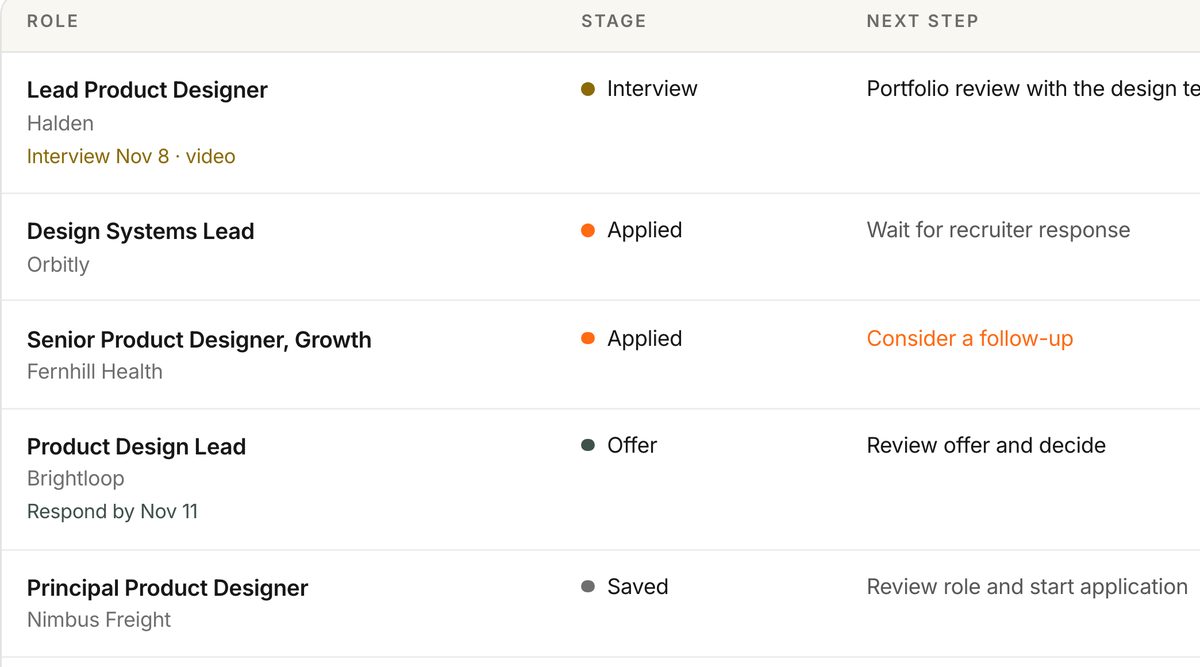
Twenty applications with different deadlines, test windows and portals is a tracking problem before it is anything else. Record each scheme's open date, deadline, test deadline, assessment centre date and the status, and review it weekly; our guide to tracking job applications has a template, and Applyd's tracker holds the same fields with reminders. Then tailor each application to the employer's own words, because the first sift is often automated: Applyd's free CV and job description check lists the requirements an advert names that your CV does not, and the printed advert and a highlighter do the same.
Common mistakes
- Applying in December. Rolling schemes have been assessing since September. Apply in the first fortnight.
- Skipping the practice tests. The tests cut hard, and the formats are public.
- One CV for twenty schemes. The situational judgement test and the sift both measure how well you match that employer's stated values.
- Using AI in the assessment. Employers are looking for it, and Barclays withdraws the application.
- London only. The regional streams pay close to London rates with fewer applicants per place.
- Treating a scheme as the only route. A direct junior role in the same bank gets you the same experience without the odds.
Frequently asked questions
When do graduate schemes open and close in the UK?
Most schemes for September 2027 starts opened in September or October 2026. Prospects says employers usually accept applications until the end of the year or early January, with assessment centres from January to March 2027, but many schemes are rolling and close once they are full. Apply in the first weeks after a scheme opens.
How many people apply for each graduate job?
The Institute of Student Employers counted 141 applications per graduate vacancy in the 2025/26 cycle, and 172 in London, across 155 large employers. The figure was 140 the year before. Graduate hiring rose 4% in 2025/26 after an 8% fall, so the market has stopped shrinking but the competition has not eased.
How much do graduate schemes pay in banking?
NatWest publishes £60,000 for its corporate and institutional banking programme and £37,500 for risk, both starting September 2027. The FCA pays £37,000 in London and £33,600 in Leeds and Edinburgh. The ISE's median starting salary across all graduate schemes was £33,000. Most banks and all the Big Four firms do not publish their graduate salaries.
What happens at a graduate assessment centre?
NatWest describes its assessment centre as a full day of virtual activities after an application, a work scenarios test, an online skills assessment and a recorded video interview. The day typically combines a group exercise, a case study, a presentation and an interview, all scored against the same competencies, so consistency across the tasks matters more than any one of them.
Can I do a graduate scheme without a 2:1?
Some. The Civil Service Fast Stream says most of its schemes are open to graduates with a 2:2 or above. NatWest's programmes ask for a 2:1, and its risk programme for a 2:1 in a STEM subject. Where a scheme asks for a 2:1, a degree apprenticeship or a direct application to a junior role at the same employer is the alternative route.
Is a degree apprenticeship better than a graduate scheme?
It is the same destination without tuition fees. Level 6 and 7 apprenticeships are equivalent to a bachelor's or master's degree, you are paid as an employee with at least 20% of working hours for study, and banks and accountancy firms run them in the same functions as their graduate schemes. The trade-off is starting work at 18 rather than 21.
Sources
- Graduate schemes: how and when to apply — Prospects
- Apprenticeships rise as graduate vacancies drop 8% (Student Recruitment Survey 2025) — Institute of Student Employers
- ISE Student Recruitment Report 2026 — Institute of Student Employers
- Employers cut student work experience roles as demand rises (ISE 2026 survey figures) — Times Higher Education
- The Graduate Market report — High Fliers Research
- Corporate and Institutional Banking graduate programmes — NatWest Group
- Risk graduate programmes — NatWest Group
- Early careers: graduate scheme salaries — Financial Conduct Authority
- Actuarial graduate pathway — Aviva
- Accountancy graduate pathway — Aviva
- Reward and recognition (graduate and apprentice pay) — KPMG UK
- Students: frequently asked questions — EY UK
- Key facts about UK-based financial and related professional services 2026 — TheCityUK
- Civil Service Fast Stream — Civil Service Careers
- Fast Stream: guidance on the use of Generative AI — Civil Service Careers
- Engineering graduate programmes — NatWest Group
- Graduate Program, Engineering Pathways (Cambridge, Manchester, Sheffield, Bristol) — Arm
- Emerging Technology Graduate Programme, Osterley — Sky
- Sheffield Engineering Graduate programme (2027) — HSBC
- 2027 Technology Developer Graduate Programme, Glasgow — Barclays
- Graduate programme — Bank of England
- Deloitte opens doors for 1,500 new graduates, apprentices and early careers talent — Deloitte UK
- Assessments and how to apply (AI guidance) — Lloyds Banking Group
- Graduate Outcomes results, class of 2023/24 — HESA (Jisc)
- 1 in 5 graduates apply for more than 100 jobs (Early Careers Survey 2026) — Prospects at Jisc
- ISE's 2026 student recruitment survey (reported) — Wonkhe
- Using the Civil Service Jobs website — GOV.UK
- Civil Service online tests — GOV.UK
- Hints and tips: AI tools in interviews — Barclays
- Become an apprentice — GOV.UK
- Apply for an apprenticeship — GOV.UK
- National Minimum Wage and National Living Wage rates — GOV.UK
- Graduate visa — GOV.UK
- Immigration Rules Appendix Skilled Worker (new entrant salary rules) — GOV.UK